
Introduction
Artificial Intelligence is no longer a concept of the future; it is already shaping how we live, work, and communicate. From voice assistants to recommendation systems, AI has quietly become part of everyday life. However, what we see today is only the beginning of a much larger transformation.
The future of artificial intelligence promises even more advanced systems capable of reasoning, learning, and adapting like humans. Industries across the world are preparing for this shift because AI is expected to redefine productivity, creativity, and decision-making processes. Businesses are investing heavily in machine learning, automation, and data-driven technologies to stay ahead in this evolving landscape.
Understanding the future of artificial intelligence is important not just for tech professionals but also for students, entrepreneurs, and everyday users. It will influence education, healthcare, transportation, entertainment, and nearly every other field. As AI continues to grow, it brings both opportunities and challenges that society must carefully manage.
In this article, we will explore what artificial intelligence is, why it matters, how it works step-by-step, its benefits and risks, common mistakes to avoid, and expert insights into its future development. This guide is designed to help beginners and intermediate readers clearly understand where AI is heading and how it may shape the world in the coming years.
What is Artificial Intelligence?
Artificial Intelligence refers to the ability of machines and computer systems to perform tasks that normally require human intelligence. These tasks include learning, reasoning, problem-solving, understanding language, and recognizing patterns.
AI systems are built using algorithms and large datasets. They learn from experience and improve their performance over time without being explicitly programmed for every task. This ability to learn and adapt makes AI powerful and versatile.
There are different types of AI, including narrow AI, general AI, and superintelligent AI. Narrow AI is designed for specific tasks like facial recognition or voice assistants. General AI refers to machines that can perform any intellectual task like a human, while superintelligent AI is a theoretical concept that surpasses human intelligence.
Machine learning and deep learning are key components of AI. These technologies allow systems to analyze large amounts of data and make predictions or decisions based on patterns. Today, AI is used in search engines, self-driving cars, healthcare diagnostics, and many other areas.
Why is Artificial Intelligence Important?
Artificial Intelligence is important because it improves efficiency, accuracy, and productivity across industries. It helps businesses automate repetitive tasks, allowing humans to focus on more creative and strategic work.
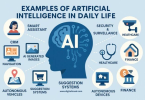
In healthcare, AI assists doctors in diagnosing diseases faster and more accurately. In finance, it helps detect fraud and manage risks. In education, AI-powered tools personalize learning experiences for students.
Another reason AI is important is its ability to process massive amounts of data quickly. Humans cannot analyze complex datasets in seconds, but AI systems can. This helps organizations make better decisions based on real-time insights.
AI also plays a crucial role in innovation. It enables the development of new technologies like autonomous vehicles, smart assistants, and advanced robotics. As a result, it is becoming a key driver of global economic growth.
Detailed Step-by-Step Guide to Understanding AI Development
Step 1: Data Collection
AI systems begin with data. Large amounts of structured and unstructured data are collected from various sources such as websites, sensors, and user interactions. This data forms the foundation of AI learning.
Step 2: Data Processing
Once collected, the data is cleaned and organized. This step removes errors, duplicates, and irrelevant information. Clean data ensures better accuracy in AI models.
Step 3: Model Training
In this stage, machine learning algorithms are used to train the AI model. The system analyzes patterns in the data and learns how to make predictions or decisions.
Step 4: Testing and Evaluation

After training, the model is tested using new data. This helps measure its accuracy and performance. Adjustments are made if necessary.
Step 5: Deployment
Once the model performs well, it is deployed into real-world applications. It can now assist users, automate tasks, or provide insights.
Step 6: Continuous Improvement
AI systems continue learning from new data. This allows them to improve over time and adapt to changing environments.
Benefits of Artificial Intelligence
- Improves efficiency and reduces human workload
- Enhances accuracy in decision-making processes
- Provides automation in repetitive tasks
- Supports medical diagnosis and healthcare advancements
- Enables personalized user experiences
- Helps businesses increase productivity and profits
- Strengthens cybersecurity and fraud detection systems
Disadvantages / Risks of Artificial Intelligence
- High development and maintenance costs
- Risk of job displacement due to automation
- Dependence on large datasets and infrastructure
- Privacy and data security concerns
- Possibility of biased decision-making in algorithms
- Limited emotional and human understanding
- Potential misuse in unethical applications
Common Mistakes to Avoid
One common mistake is overestimating AI capabilities. While AI is powerful, it is not perfect and still requires human supervision.
Another mistake is ignoring data quality. Poor data leads to inaccurate results and unreliable systems. Proper data management is essential.
Many organizations also fail to consider ethical implications. AI should be developed responsibly to avoid bias and discrimination.
Additionally, relying too much on automation can reduce human involvement in critical decision-making processes. Balance is important.
Finally, neglecting continuous updates can make AI systems outdated. Regular improvements are necessary for long-term performance.
FAQs
1. What is the future of artificial intelligence?
The future of artificial intelligence involves more advanced systems that can think, learn, and adapt with minimal human intervention. It will impact almost every industry, from healthcare to transportation.
2. Will AI replace human jobs?
AI may replace some repetitive jobs, but it will also create new opportunities. Many roles will evolve rather than disappear completely.
3. Is artificial intelligence safe?
AI is generally safe when developed responsibly. However, it requires proper regulation and ethical guidelines to prevent misuse.
4. How is AI used in daily life?
AI is used in smartphones, online shopping recommendations, virtual assistants, navigation apps, and social media platforms.
5. What skills are needed for AI careers?
Skills in programming, mathematics, data analysis, and machine learning are important for AI-related careers.
6. Can AI think like humans?
AI can simulate certain aspects of human thinking, but it does not possess emotions or consciousness like humans.
Expert Tips & Bonus Points
Experts suggest focusing on continuous learning because AI technology evolves rapidly. Staying updated with trends is essential for professionals and students.
Another tip is to understand the basics of data science. Since AI depends heavily on data, strong knowledge in this area is valuable.
It is also important to practice ethical AI development. Responsible use of technology ensures long-term benefits for society.
Businesses should start small when implementing AI solutions and gradually scale up based on performance and needs.
Finally, collaboration between humans and AI is the future. Instead of replacing humans, AI should be used as a tool to enhance human capabilities.
Conclusion
Artificial Intelligence is shaping a new era of technology that is transforming how the world operates. Its future holds immense potential, from improving healthcare systems to revolutionizing transportation and education. While AI offers powerful benefits, it also brings challenges that must be carefully managed.
Understanding the future of artificial intelligence helps individuals and businesses prepare for upcoming changes. It is not just about machines becoming smarter, but about how humans adapt and work alongside these systems. The balance between innovation and responsibility will define the success of AI in the long run.
As we move forward, AI will continue to evolve and integrate deeper into our daily lives. Those who learn and adapt early will be better positioned to take advantage of its opportunities. The journey of artificial intelligence has just begun, and its future promises to be one of the most influential technological revolutions in human history.