
Introduction
Rana Sahab, heat management plays a crucial role in modern technology, especially in electronics, aerospace, and industrial systems. One of the most efficient solutions used today is heat pipes, which transfer heat quickly and effectively without relying on mechanical parts. In simple terms, heat pipes are devices designed to move thermal energy from one place to another with very high efficiency. They are widely used in computers, solar systems, spacecraft, and industrial cooling systems. Understanding how heat pipes work can help you appreciate why modern devices remain compact yet powerful.
Heat pipes may look simple from the outside, but their internal working mechanism is highly scientific. They rely on phase change principles, capillary action, and thermodynamics to transfer heat efficiently. Unlike traditional cooling methods that depend on fans or pumps, heat pipes operate passively, meaning they require no external energy once installed. This makes them highly reliable and long-lasting.
In this article, we will explore everything about heat pipes, including their structure, working process, advantages, disadvantages, and real-world applications. By the end, you will have a clear understanding of why heat pipes are considered one of the most effective thermal management technologies in modern engineering.
What is Heat Pipe Technology?
Heat pipe technology is a thermal transfer system that uses the principles of evaporation and condensation to move heat from a hot area to a cooler area. A heat pipe is typically a sealed tube filled with a working fluid such as water, ammonia, or alcohol, depending on the application temperature range.
Inside the pipe, a vacuum is created to lower the boiling point of the fluid. This allows heat to quickly vaporize the liquid at the hot end and transfer it to the cold end, where it condenses back into liquid form. The cycle repeats continuously, ensuring efficient heat transfer.
Heat pipes are commonly used in:
- Computer processors and GPUs
- Solar thermal systems
- Aerospace cooling systems
- Industrial heat exchangers
- LED lighting systems
The key advantage of heat pipes is their ability to transfer large amounts of heat over long distances with minimal temperature loss. This makes them far more efficient than solid metal conductors like copper or aluminum alone.
Why is Heat Pipe Technology Important?
Rana Sahab, modern devices generate a significant amount of heat, especially in compact systems like laptops, smartphones, and high-performance machines. Without proper cooling, these devices can overheat, leading to reduced performance or even permanent damage.
Heat pipes are important because they solve this problem efficiently. They provide a passive cooling solution that does not rely on moving parts like fans or pumps. This reduces energy consumption and increases system reliability.
Some key reasons why heat pipe technology is important include:
- High thermal conductivity compared to solid metals
- Passive operation with no power requirement
- Compact and lightweight design
- Long lifespan with minimal maintenance
- Ability to handle high heat loads efficiently
In industries like aerospace, where reliability is critical, heat pipes are essential for maintaining safe operating temperatures. Similarly, in consumer electronics, they help ensure devices remain slim while still delivering high performance.
Detailed Step-by-Step Working of Heat Pipes
Structure of a Heat Pipe
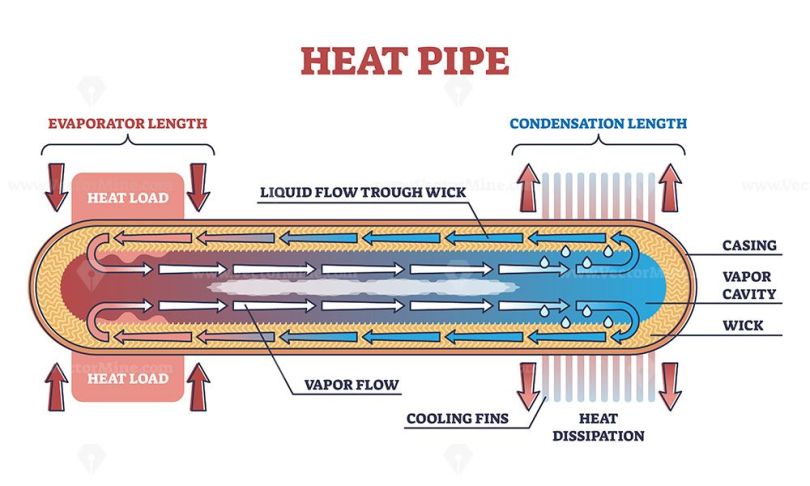
A heat pipe consists of three main parts:
- Evaporator section (heat input area)
- Adiabatic section (middle transport zone)
- Condenser section (heat output area)
Inside the pipe, there is a working fluid and a wick structure that helps return the liquid back to the evaporator section.
Step 1: Heat Absorption
When heat is applied to the evaporator section, the working fluid inside starts to absorb thermal energy. Due to low pressure inside the sealed pipe, the liquid quickly turns into vapor.
Step 2: Vapor Movement
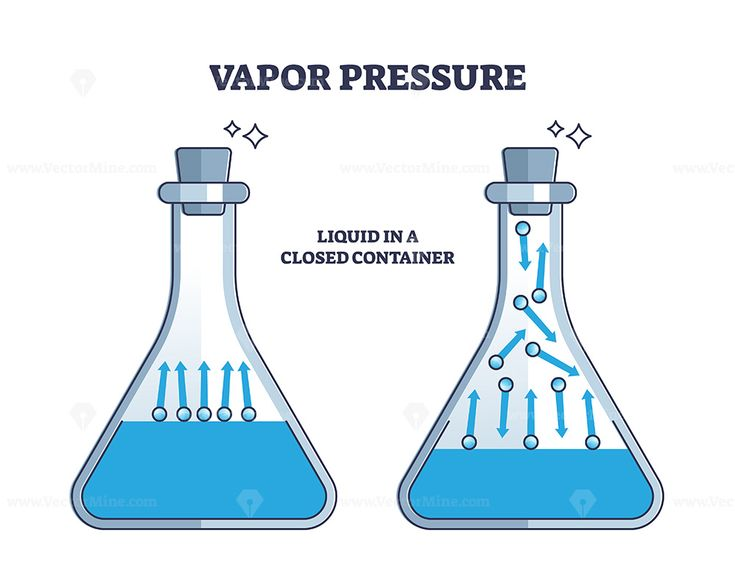
The vaporized fluid moves rapidly toward the cooler section of the pipe. This movement happens because of the pressure difference between the hot and cold ends.
Step 3: Heat Release
At the condenser section, the vapor loses its heat to the surroundings. As a result, it condenses back into liquid form.
Step 4: Return of Liquid
The condensed liquid returns to the evaporator section through the wick structure using capillary action. This cycle continues repeatedly without interruption.
Step 5: Continuous Heat Transfer
This continuous cycle allows heat pipes to transfer thermal energy efficiently from one end to another without requiring mechanical energy.
Benefits of Heat Pipe Technology
Heat pipes offer several advantages that make them highly valuable in modern systems:
- Extremely high thermal conductivity
- Passive operation with zero energy consumption
- Reliable performance over long periods
- Compact size suitable for modern electronics
- No noise due to absence of moving parts
- Efficient heat distribution across surfaces
- Works in both horizontal and vertical orientations
Disadvantages / Limitations of Heat Pipes
Despite their advantages, heat pipes also have some limitations:
- Limited operating temperature range depending on fluid used
- Performance can degrade if damaged or improperly sealed
- Not suitable for extremely large-scale heat transfer systems alone
- Manufacturing requires precision and can be costly
- Performance depends heavily on orientation in some designs
Common Mistakes to Avoid When Using Heat Pipes
Many users and designers make mistakes that reduce the efficiency of heat pipes:
- Using incorrect working fluid for temperature range
- Poor installation leading to reduced contact with heat source
- Overloading beyond design thermal capacity
- Ignoring proper orientation in gravity-assisted systems
- Damaging the sealed structure during handling
Avoiding these mistakes ensures optimal performance and longer lifespan of heat pipes.
FAQs About Heat Pipes
1. What is the main function of heat pipes?
The main function of heat pipes is to transfer heat from a hot region to a cooler region efficiently using phase change of a working fluid.
2. Are heat pipes better than traditional cooling systems?
Yes, in many applications heat pipes are more efficient because they operate passively and transfer heat faster than solid metal conductors alone.
3. What fluids are used inside heat pipes?
Common fluids include water, ammonia, methanol, and alcohol, depending on the temperature range of application.
4. Can heat pipes work without electricity?
Yes, heat pipes are completely passive systems and do not require any external power to function.
5. Where are heat pipes commonly used?
They are used in laptops, CPUs, spacecraft, solar panels, LED systems, and industrial heat exchangers.
6. Do heat pipes wear out over time?
Under normal conditions, heat pipes last many years, but damage or leakage can reduce their efficiency.
Expert Tips & Bonus Points
Rana Sahab, if you are working with systems that generate heat, consider these expert insights:
- Always ensure proper thermal contact between heat pipe and heat source
- Use heat pipes with appropriate thermal ratings for your system
- Combine heat pipes with heat sinks for maximum cooling efficiency
- Avoid bending or deforming heat pipes during installation
- Choose copper-based designs for high-performance applications
These small adjustments can significantly improve cooling efficiency and system reliability.
Conclusion
Heat pipes are one of the most effective thermal management technologies used in modern engineering. Their ability to transfer heat efficiently without requiring external energy makes them highly valuable in electronics, aerospace, and industrial systems. By using phase change principles, heat pipes ensure continuous and reliable heat transfer between hot and cold zones.
Rana Sahab, as technology continues to evolve, devices are becoming smaller yet more powerful, increasing the need for efficient cooling solutions. Heat pipes solve this challenge by offering compact, silent, and highly efficient thermal performance. From laptops and smartphones to satellites and industrial machines, their applications are vast and critical.
Understanding how heat pipes work helps you appreciate the engineering behind modern cooling systems. Their simplicity in design combined with advanced thermodynamic principles makes them a cornerstone of thermal management. Whether in everyday electronics or high-end aerospace systems, heat pipes continue to play a vital role in keeping technology safe, efficient, and reliable.