
Home and away form in the 2016–17 Bundesliga was not just trivia for commentators; it fundamentally shaped how often favourites delivered, how risky underdogs really were, and where the market misread match dynamics. By looking at that season’s patterns with a structured lens, you can learn how to interpret home/away stats in a way that actually improves betting decisions rather than just confirming biases.
Why Home and Away Form Deserves Serious Attention
Bundesliga 2016–17 contained 306 matches, with home teams winning roughly two‑thirds of all victories, showing that home advantage was a strong structural feature of the league rather than a myth. At the same time, away sides still collected a significant share of points, especially when they were tactically suited to counter‑attacking, which means that simply backing the home team on principle missed many profitable spots. The key impact for bettors is that home and away records must be read as interacting with style, squad quality and schedule, not as stand‑alone indicators that automatically justify or dismiss a bet.
League‑Level Home/Away Patterns in 2016–17
Across the season, the distribution of results shows a clear lean toward home success but with enough away wins and draws to punish anyone who reduces analysis to “home = safe.” The overall stats indicate that home victories made up roughly 65% of all wins, with the remainder split between away successes and draws, reinforcing that familiar stadiums, crowd support and travel demands still matter in German football. However, the final table also reveals that top clubs like Bayern and the main challengers were effective both home and away, while weaker sides often relied heavily on their home schedules for survival, creating very different risk profiles depending on venue.
How Top Teams Expressed Home and Away Strength
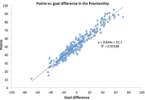
Bayern’s 2016–17 dominance came with strong records both at the Allianz Arena and on the road, underlined by their +67 goal difference across the campaign, which reflects consistent control in multiple environments. Leipzig, Dortmund and Hoffenheim also showed solid away returns while using home matches to exert extra pressure, meaning that their “form split” was more about nuance than about stark contrasts between fortress and fragility. For bettors, this means that treating every top side’s away match as a potential banana skin underestimates their ability to travel; instead, you focus on specific spots—short rest, tough venues, stylistic clashes—where even a strong team’s away edge may shrink enough that prices become questionable.
When Home Form Signals Real Edge for Smaller Clubs
In contrast, many mid‑table and lower‑table teams in 2016–17 depended heavily on their home schedule to accumulate points and stay clear of relegation danger. Clubs nearer the bottom often recorded most of their wins at home and struggled to replicate performance away, where they faced more pressure, less confidence and tactical mismatches that exposed weaknesses in possession or defensive transitions. For bettors, this creates a specific cause–effect relationship: a “small” team with a strong home record is not automatically good, but in selected home fixtures against peers or out‑of‑form visitors, their home form justifies a more generous estimate of their winning chances than the overall table might suggest.
Mechanisms Behind Home and Away Splits
Improving accuracy means understanding why home or away records diverge, not just that they do.
- Tactical boldness at home: Some sides press higher and commit more players forward at home, which boosts chance creation but can also increase volatility.
- Psychological comfort: Familiar routines and crowd support help weaker teams maintain concentration and belief, especially in tight matches.
- Travel and schedule: Shorter recovery times and long trips affect away sides more, especially in mid‑week-to‑weekend cycles.
In 2016–17, these mechanisms played out in many fixtures where a mid‑table home team looked ordinary on paper but repeatedly turned their stadium into a leveller against stronger visitors. Bettors who identified those patterns in advance could justify backing the host or avoiding short‑priced favourites whose away form, while decent overall, dipped in specific conditions.
Using UFABET to Structure Home/Away Analysis
Once you have a clear idea of which 2016–17 teams showed meaningful home or away biases, you still need a method to apply that knowledge consistently. When a bettor operates through UFABET, a practical approach is to treat that platform as a workspace for home/away experiments: before each round they can note a shortlist of fixtures where the host’s home record or the visitor’s away strength materially shifts the probabilities, compare those estimates to the odds offered, and then log which choices they actually act on. Over a stretch of matches, their ufabet168 bet history becomes evidence about whether their reading of home and away trends genuinely produces better decisions or whether they are overvaluing certain stadium reputations and underweighting others, prompting adjustments in how they factor venue into pre‑match models.
How casino online Contrasts with Venue‑Based Edges
Home and away analysis in football draws on structural factors—crowd influence, tactics, travel—that affect performance probabilities and can be observed over hundreds of matches. In a casino online context, by contrast, the probabilities are fixed by design and unaffected by “form,” meaning that venue‑style edges do not exist in the same way. For bettors who split their time between Bundesliga analysis and a casino online website, keeping this distinction in mind helps prevent conceptual crossover: success in reading home/away patterns should inform football wagers but should not encourage the belief that similar “edges” exist at games where long‑term outcomes are mathematically tilted against the player, preserving discipline in both domains.
Practical Checklist for Reading Home and Away Form More Precisely
To move from general impressions to concrete decisions, you can use a checklist that connects 2016–17 home and away data to specific match choices. This turns raw stats—home wins, away losses, goal splits—into a structured filter that each potential bet must pass before you risk money.
Before placing a bet that relies on home or away form, ask:
- How does each team’s home/away points per game compare to their overall average across the 2016–17 season?
- Is the home side’s strong record built mostly on beating weak teams, or have they held their own against stronger visitors?
- Does the away team’s style travel well—compact defence and counter‑attacks—or rely heavily on home pressure and possession?
- Are there schedule or injury factors that make this specific home or away outing harder than the stats suggest?
- Do current odds already account for these venue trends, or do they still lean too heavily on overall table position?
Working through these questions forces you to connect venue form with opponent quality and context rather than using it as a simple yes/no filter. In 2016–17 terms, this could mean backing a mid‑table host against a theoretically superior visitor whose away record was only average, or avoiding a hyped underdog whose “strong home form” came primarily from narrow wins over fellow strugglers.
Summary
Bundesliga 2016–17 shows that home and away form can significantly reshape match probabilities, but only when interpreted in context and connected to tactical, psychological and schedule‑based mechanisms. League‑wide data confirms that home advantage was real, while the final table and team records reveal which clubs turned their stadiums into genuine assets and which travelled well enough that venue mattered less than opponent and timing. When you treat home/away stats as structured inputs to a clear checklist—and keep that analytical mindset distinct from higher‑variance gambling environments—you move from vague beliefs about “fortresses” and “bad travellers” to a more precise, evidence‑driven way of reading form before each bet.